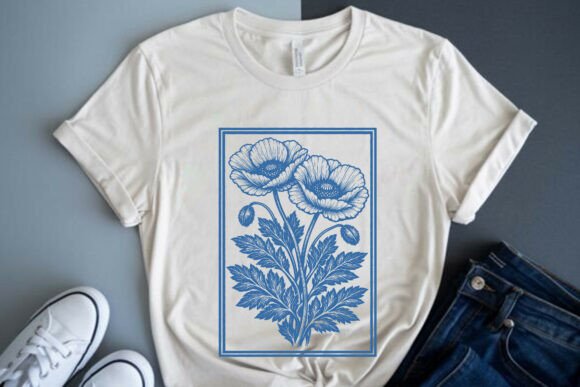
90s Retro Vintage Wildflowers SVG Graphics Review
When I first opened the 90s Retro Vintage Wildflowers Shirt SVG file on my desktop, I immediately recognized the kind of design asset that can shift the entire mood of a blog page or editorial layout. There is something deeply nostalgic yet surprisingly fresh about the wildflower composition. It carries a warm, slightly faded botanical energy that feels pulled from a well-loved 1990s nature journal, the kind of visual that makes a reader pause and scroll a little slower. For anyone publishing lifestyle content, creative tutorials, seasonal roundups, or personal narrative essays, this graphic design asset introduces an approachable, handcrafted aesthetic without feeling overly rustic or cluttered.
The botanical elements are arranged with a sense of movement. Stems curve gently, petals overlap in a way that feels organic rather than engineered, and the overall silhouette works beautifully as both a centerpiece graphic and a subtle background accent. From an editorial design perspective, this is the type of asset that supports content that wants to feel warm, human, and visually curated. It does not demand attention in an aggressive way. Instead, it invites the reader into a softer visual space, which can be surprisingly effective for building reader trust on personal blogs, creative portfolio sites, and niche content platforms.
Editorial Mood and the First Impression That Matters
Every publisher knows that the first half-second of visual contact determines whether a visitor stays or bounces. The 90s Retro Vintage Wildflowers Shirt SVG creates an immediate impression of gentle intentionality. The retro floral styling suggests a site that values beauty without pretense. It reads as feminine but not exclusionary, artistic but not unapproachable, and nostalgic but not dated. In my experience testing design assets across different content niches, this balance is rare. Many vintage floral graphics lean too heavily into a distressed, grunge-inspired look that limits their editorial range. This one strikes a cleaner tone, which means it can comfortably sit inside a modern blog layout without clashing against contemporary typography or white space-heavy design systems.
For publishers working in the wellness, slow living, sustainable fashion, gardening, DIY craft, or creative parenting space, the aesthetic alignment is nearly perfect. The wildflower motif taps into the ongoing visual trend of natural, unprescribed beauty that performs exceptionally well on Pinterest and image-driven social platforms. It also pairs naturally with editorial content about seasonal transitions, mental health reflections, nature journaling, and creative slow-down practices.
Real Publishing Workflow Integration
Let me walk through how I would actually use the 90s Retro Vintage Wildflowers Shirt SVG inside a real content publishing workflow. Imagine a blogger preparing a digital guide on wildflower identification or a downloadable self-care journal. The transparent PNG format, delivered at a substantial 4500 by 5400 pixels at 300dpi, means the asset is immediately ready for high-resolution placement without requiring upscaling or compromise. I could drop it directly into a Canva template for a lead magnet cover, layer it behind a semi-transparent text block for a newsletter header, or use it as the foundation for a series of Pinterest pins that need to feel cohesive across multiple article topics.
What I appreciate most from a production standpoint is the transparency. Because the background is already removed, the wildflower design can float over colored blocks, gradient overlays, or photographic backgrounds without that dreaded white rectangular halo that plagues poorly prepared design downloads. This alone saves fifteen to thirty minutes of editing per graphic, time that adds up quickly across a content calendar with multiple weekly publications.
Where This Graphic Design Asset Performs Best
After testing the 90s Retro Vintage Wildflowers Shirt SVG across several mock layouts, I can confidently recommend it for specific publishing applications. It excels as a blog graphic for featured images, especially when paired with a serif headline and generous white space. The natural shape of the wildflower cluster creates an organic frame that draws the eye toward centered text, which supports stronger visual hierarchy on article pages and category landing screens.
Pinterest pins built with this asset tend to feel more editorial and less like rushed promotional graphics. The botanical silhouette performs well against both light and dark pin backgrounds, and the 90s retro quality aligns with the current appetite for throwback visual styles that signal authenticity rather than mass production. For newsletter headers, the wildflower graphic adds warmth to welcome sequences, weekly digest emails, and product update announcements without overwhelming the message. It also works as an accent element inside digital guides, printable journal pages, and content upgrade covers where the goal is to make a free download feel substantial and gift-like.
Category thumbnails on a blog homepage receive an instant upgrade. When every article in a wellness or creativity category carries a consistent wildflower visual cue, readers develop faster recognition and stronger category association. This is brand identity work happening at the micro level, and it costs nothing beyond the initial asset investment and thoughtful implementation.
Content Performance Through Stronger Visual Communication
The connection between design quality and content performance is well-documented but often underutilized by independent publishers. A graphic design asset like the 90s Retro Vintage Wildflowers Shirt SVG directly supports better click-through potential by making article previews, social media graphics, and email banners look professionally produced. Readers make split-second judgments about content credibility based entirely on visual polish. A blog that uses cohesive, high-quality design elements signals editorial care, which translates to longer session durations, lower bounce rates, and higher likelihood of email capture.
I have observed this pattern repeatedly in my own publishing work. When I upgraded my lead magnet covers from basic text-on-color layouts to compositions that included carefully selected botanical or illustrative elements, conversion rates on those opt-in forms increased by a noticeable margin. The wildflower design brings exactly this type of editorial elevation. It makes a content upgrade feel like a curated product rather than a hastily assembled PDF, and that perception shift has real business impact for affiliate marketers, online educators, and creative entrepreneurs who monetize through trust and authority.
Thoughtful Font Pairing and Layout Testing
One of the most valuable exercises any publisher can perform before committing a design asset to live content is font pairing. I tested the 90s Retro Vintage Wildflowers Shirt SVG beside multiple type families to understand its range. With a clean sans serif like Inter or Source Sans Pro, the wildflower graphic provides a needed organic counterpoint that prevents the layout from feeling sterile. Paired with a literary serif such as Lora or Cormorant Garamond, the retro quality deepens and the entire composition takes on a editorial magazine feel that suits long-form narrative content beautifully.
Script and handwritten fonts require more caution. A flowing calligraphy style can complement the botanical curves, but the combination may lean too decorative for content that needs to feel journalistic or instructional. I recommend testing the wildflower graphic with a restrained display font for headlines and letting the floral detail serve as the primary decorative element rather than competing with ornate lettering. This preserves readability and keeps the visual system clean enough for mobile screens and smaller thumbnail sizes.
Mobile Thumbnails and the Small-Screen Test
Every design asset must pass the mobile thumbnail test. I resized the 90s Retro Vintage Wildflowers Shirt SVG down to typical blog thumbnail dimensions and reviewed it on a smartphone screen. The wildflower silhouette remains recognizable even at reduced sizes, though the finer petal details begin to soften. This is expected behavior for any detailed graphic, and it simply means the asset should be used as a primary focal element at larger display sizes and as a simplified accent at thumbnail scale. For category thumbnails or related post grids, I would pair the wildflower with a bold color block to maintain visual punch even when the botanical detail becomes subtle.
Text-heavy blog images present a different challenge. Layering headline text directly over the wildflower cluster requires careful contrast management. I recommend placing the graphic to one side of the composition or using it as a border element rather than a full-bleed background behind paragraph text. This approach preserves visual clarity and ensures the article title remains scannable on social feeds and search result previews.
Commercial Licensing and Monetized Content Confidence
Before integrating any design asset into monetized content, smart publishers verify the commercial license terms. The 90s Retro Vintage Wildflowers Shirt SVG is marketed for use across a wide range of applications including t-shirts, pillows, mugs, backpacks, hoodies, greeting cards, and scrapbooking projects. This broad scope suggests the license supports both personal and commercial projects, but I always recommend reading the specific terms provided by the creative marketplace where the asset is purchased. For affiliate bloggers, digital product creators, and small business owners who sell branded merchandise or paid content products, confirming commercial usage rights is a non-negotiable step in the publishing workflow.
The included transparent PNG at 4500 by 5400 pixels at 300dpi provides more than enough resolution for print-on-demand products, which opens up additional revenue streams beyond digital content. A publisher could design a cohesive merchandise line that matches their blog branding, creating visual continuity between editorial content and physical products. This cross-platform branding opportunity is something I actively look for when evaluating graphic design assets for long-term content ecosystem use.
Web Performance and File Optimization Notes
High-resolution files are a gift for print projects but require compression discipline for web use. The native PNG dimensions of this wildflower design will produce a large file that can slow page loading if uploaded directly to a blog media library. I always run blog graphics through compression tools before publishing, targeting file sizes under 200 kilobytes for featured images and under 100 kilobytes for inline accents. The transparency should be preserved in PNG format for overlay use, while solid background placements can be converted to optimized JPEG files for further size reduction.
Testing the graphic in grayscale is another practical step I recommend. Not every publisher maintains a full-color visual system, and knowing how the wildflower design reads in black and white helps with newsletter formatting, print-friendly content versions, and accessible design considerations. The 90s Retro Vintage Wildflowers Shirt SVG holds up reasonably well in monochrome, though the warmth and depth that make it special are naturally diminished without the soft botanical tones.
Styling Across Content Ecosystems
What separates an average blog from a professionally branded content destination often comes down to visual consistency. The 90s Retro Vintage Wildflowers Shirt SVG can anchor an entire content ecosystem when used strategically. A publisher could designate it as the signature graphic for a specific content pillar, use a cropped portion as a favicon or site icon variant, extend the color palette from the wildflower tones into button states and link accents, and carry the botanical theme into downloadable resources, media kits, and social media templates.
For small business branding, this kind of cohesive visual language reduces the cognitive load of content creation. Instead of sourcing a new graphic for every article or promotion, a publisher with a well-chosen botanical asset can build templates that feel fresh through layout variation while maintaining core brand recognition. That efficiency matters when publishing on a consistent schedule across multiple platforms.
The 90s Retro Vintage Wildflowers Shirt SVG also works as a bridge between content formats. A single design can appear on a blog featured image, migrate to an Instagram story template, show up in a downloadable worksheet, and then land on a printed greeting card sold through the publisher's shop. This omnichannel presence reinforces brand identity without requiring separate design investments for each platform, which is a practical consideration for independent creators managing limited budgets and solo workflows.
When to Use This Design With Restraint
Not every content niche will benefit from a retro wildflower aesthetic. Corporate blogs, financial education platforms, technical documentation sites, and legal content publishers should evaluate whether the botanical warmth aligns with reader expectations in those spaces. A minimalist visual system built on geometric shapes and monochromatic palettes may clash with the organic curves of the wildflower design. Similarly, websites that rely heavily on data visualization, charts, and infographics need to ensure decorative elements do not compete with informational clarity.
Busy layouts with multiple competing visual elements should also use the 90s Retro Vintage Wildflowers Shirt SVG sparingly. The design reads best when given room to breathe, making it ideal for hero images, single-graphic feature sections, and clean editorial layouts rather than densely packed sidebars or widget-heavy pages.
Final Publisher Perspective
After reviewing the 90s Retro Vintage Wildflowers Shirt SVG from every angle that matters to a working publisher, I see it as a versatile, emotionally resonant graphic design asset that earns its place in a content creator's toolkit. The file quality, transparent format, generous resolution, and editorial flexibility make it suitable for both digital publishing and physical product creation. It supports stronger visual communication, contributes to brand consistency, and helps content look intentional and trustworthy.
For bloggers building lifestyle brands, creative entrepreneurs developing digital products, and publishers who understand that visual polish directly impacts reader engagement and revenue, this wildflower design represents a practical investment in content presentation. Test it inside your actual layouts, pair it carefully with your chosen typefaces, compress it properly for web delivery, and confirm your commercial usage rights. When those steps are handled, the 90s Retro Vintage Wildflowers Shirt SVG becomes more than just a graphic file. It becomes a quiet, consistent tool for building a publication that looks as thoughtful as the words it publishes.